MOOD ROOM
A physical and digital exploration reframing the act of waiting.
Mood Room is an interactive installation piece designed for a medical waiting room, reframing moments of pause as opportunities for contemplation and play. I sought to explore how physical environments influence emotional states in healthcare settings, where sterile design often amplifies discomfort. My goal was to create a soothing space, where multi-sensory engagement could shift attention away from feelings of anxiety.


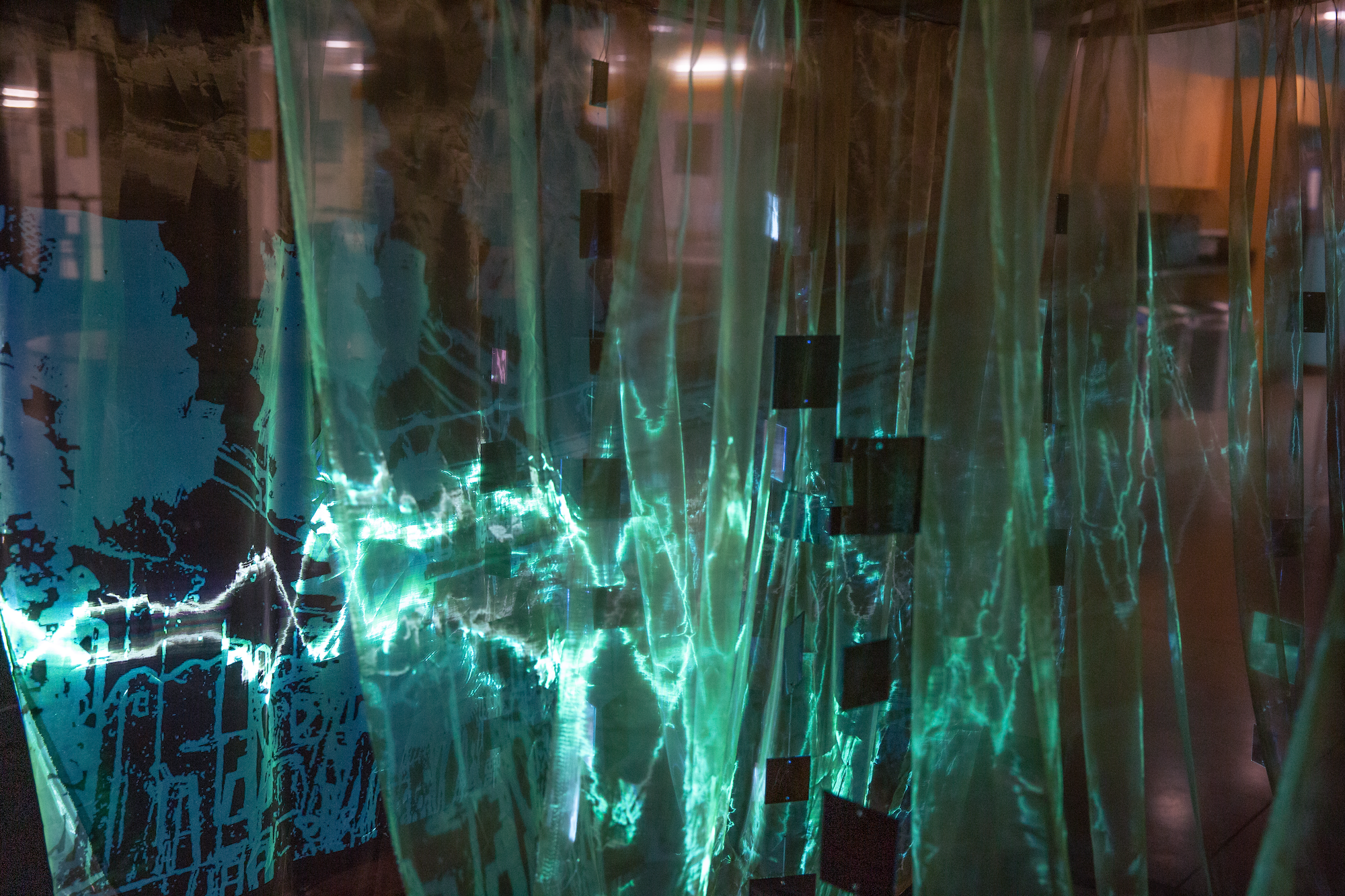

This installation uses a webcam and responsive projections programmed in TouchDesigner, inviting participants to become co-creators of the experience. Participants can use their movements to “paint” with light, which diffuses through the layers of organza and mirrored tiles.
welcome room • DIGITAL COMPONENT
The other component of the reimagined waiting room experience involved a digital prototype for an emotional check-in process, which aimed to alleviate anxiety and discomfort.
For the first stages of user research, I worked with team members Honor Magon and Komal Kumar from the Stanford class Design for Health Equity. Through in-depth interviews and observation with patients and physicians, we identified uncertainty—particularly around wait times and expectations—as a key contributor to anxiety in waiting rooms. These research insights informed the conceptual direction of the project.
We realized transforming the waiting room would require a multi-pronged approach. To take one step towards improving patient well-being and communication between patients and providers, I created a prototype for a digital emotional check-in process. This serves two functions: 1) helping patients feel more at ease in the waiting room, and 2) providing an opportunity for patients to share information that will prepare them and their primary care provider for the appointment. Both patients and providers interviewed expressed a desire for reflective moments, as well as improved communication and access to information.
This emotional check-in design and experimental installation piece are not final solutions for a transformed waiting room experience. However, they demonstrate that every experience, product, and space can be reimagined. My hope is that these contribute to conversations rethinking how healthcare experiences can better support emotional well-being.

